The Bottom Line
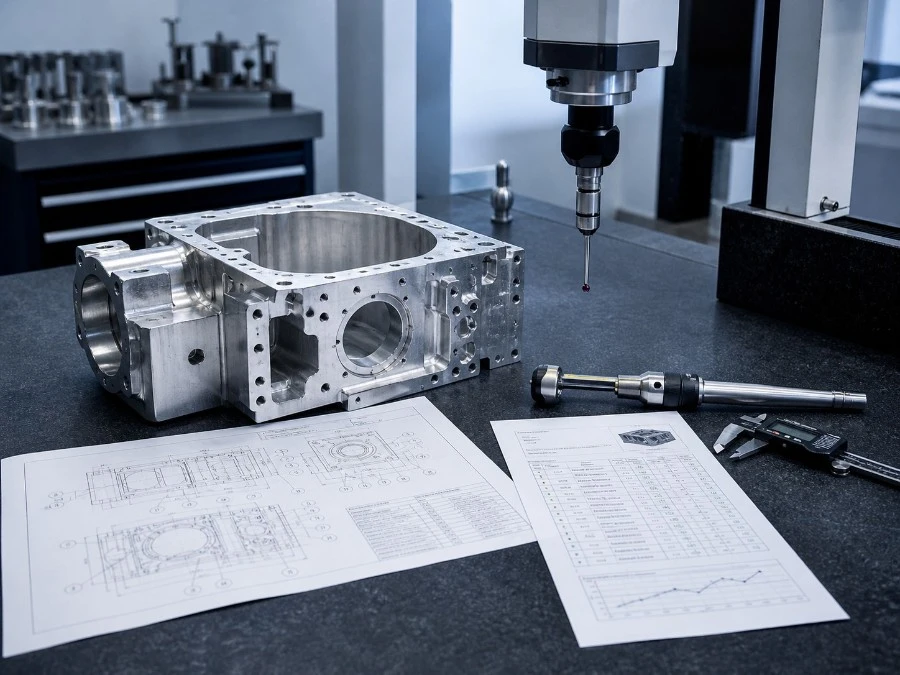
Tight tolerances increase CNC machining cost because they sharply reduce the margin for normal process variation. A feature that is easy to machine under a standard tolerance may require custom workholding, slower finishing cuts, CMM verification, and significantly more inspection time when the tolerance tightens.
The key question is not whether a tighter tolerance is technically possible. The key question is whether it protects part function. Tight control is usually worth the cost when it supports fit, sealing, alignment, motion, or repeatability. When the same level of control is applied to non-critical features, cost often increases without improving performance.
Why Tight Tolerances Change the Cost of CNC Machining
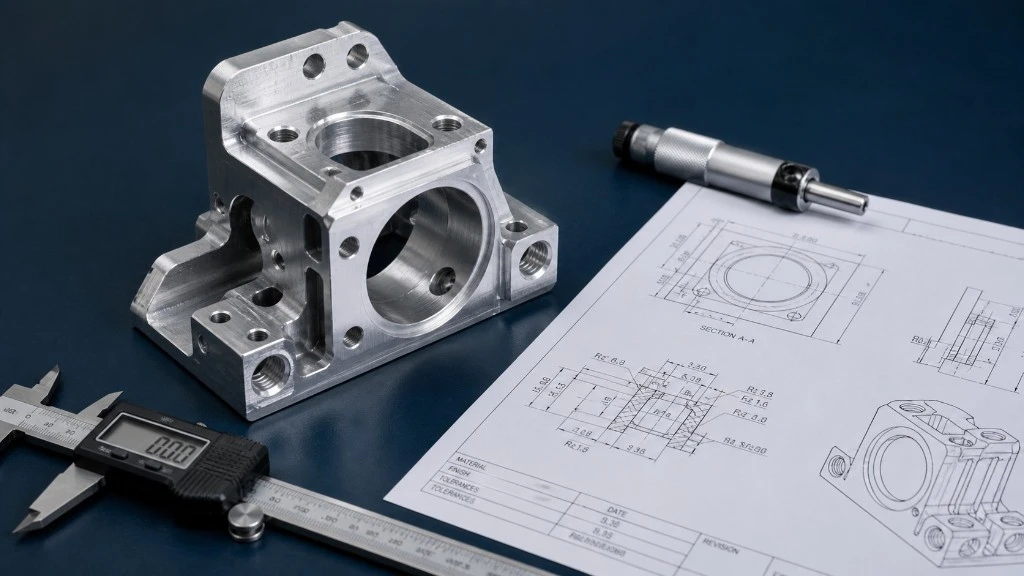
A tolerance is more than a number on a drawing. It defines how much variation is allowed during machining, inspection, and assembly.
A clear understanding of CNC machining tolerances helps separate functional requirements from unnecessary cost drivers.
When a tolerance becomes tighter, the process has less room to absorb normal variation from tooling, setup, material behavior, thermal movement, and measurement uncertainty. That means the machining supplier must spend more effort controlling the process before the part can be released.
For a simple non-critical feature, this may only add a small amount of inspection time. For a critical bore, mating surface, sealing area, datum feature, or precision alignment zone, the cost impact can be much larger.
Demanding tolerance requirements affect cost because they change how the part must be made, checked, and repeated.
Cost Does Not Always Increase in a Straight Line
Tolerance cost does not always rise gradually.
Moving from a general tolerance to a moderately controlled tolerance may add limited cost. But moving into a range that requires special setup control, CMM verification, repeated in-process checks, or tighter inspection documentation can change the quoting logic much more significantly.
This is why two dimensions that look similar on a drawing can create very different manufacturing effort.
A tolerance that is easy to hold on a short, rigid feature may become much more difficult on a thin wall, deep bore, long unsupported surface, or feature tied to a complex datum structure.
The tolerance number matters, but the feature condition, material behavior, setup access, and inspection method often matter more.
Where Tight Tolerances Add Cost
1. More Careful Setup
A general tolerance may allow the part to be machined with a standard setup strategy. A tighter requirement often needs more attention to how the part is located, clamped, and supported.
Setup becomes more important when the feature depends on:
- Datum alignment — how the part is located against the intended reference surfaces
- Part orientation — whether the feature can be machined and inspected from a stable direction
- Clamping pressure — enough force to hold the part without distorting thin or sensitive areas
- Tool access — whether the tool can reach the feature without excessive deflection
- Feature-to-feature relationship — how one controlled feature depends on another
- Repeatability across multiple parts — whether the setup can hold the same result beyond the first part
If the setup is unstable, the machine may still cut accurately on one part, but the process may not repeat consistently across the order.
That setup control takes time, and that time affects cost.
2. Slower Machining and Tool Control
Narrow tolerance ranges often require more controlled cutting conditions.
The machining process may need:
- Lighter finishing cuts
- More conservative feeds and speeds
- Additional toolpath passes
- Sharper or more specialized tooling
- More frequent tool checks
- Reduced heat buildup during machining
This is especially important for features where tool deflection, vibration, or thermal movement can affect the final dimension.
In practical terms, the machine may spend more time making the same feature because the process must prioritize stability over speed.
3. Higher Inspection Burden
The tighter the tolerance, the more important inspection becomes.
A loose or general dimension may only need standard verification. A critical dimension may require:
- First article inspection
- CMM measurement
- Multi-point inspection
- Additional in-process checks
- Documented inspection results
- More careful measurement planning
Inspection does not only add cost after machining. It can also affect the entire production flow because parts may need to wait for verification before the next operation or release step.
Higher precision requires more evidence.
4. Increased Scrap and Rework Risk
Tight dimensional control reduces the allowed margin for error. If a part is slightly outside the limit, it may require rework or become unusable.
This is where cost can rise quickly.
The risk becomes higher when the part has:
- Thin walls
- Deep pockets
- Long unsupported features
- Tight bore tolerances
- Complex datum relationships
- Multiple tight dimensions interacting together
- Materials that move or distort during machining
The tighter the allowable window, the less room there is for real-world variation.
That risk has to be priced into the manufacturing plan.
5. More Drawing Review Before Accurate Quoting
Demanding tolerance requirements also increase the need for clarification before accurate quoting.
A drawing may show a tight number, but the supplier still needs to understand:
- Which features are truly functional
- Which datums control the part
- Which dimensions affect assembly
- Which surfaces need inspection evidence
- Which tolerances are inherited from an old drawing
- Which requirements may be tighter than necessary
As part of our CNC machining services, tolerance review helps connect drawing requirements with realistic manufacturing and inspection planning.
A structured tolerance review helps reduce quoting assumptions, inspection delays, and avoidable cost surprises before the project moves into machining.
A Typical RFQ Scenario
In many RFQ reviews, the issue is not that the part is impossible to machine. The issue is that the drawing applies the same level of tolerance control to both functional and non-functional features.
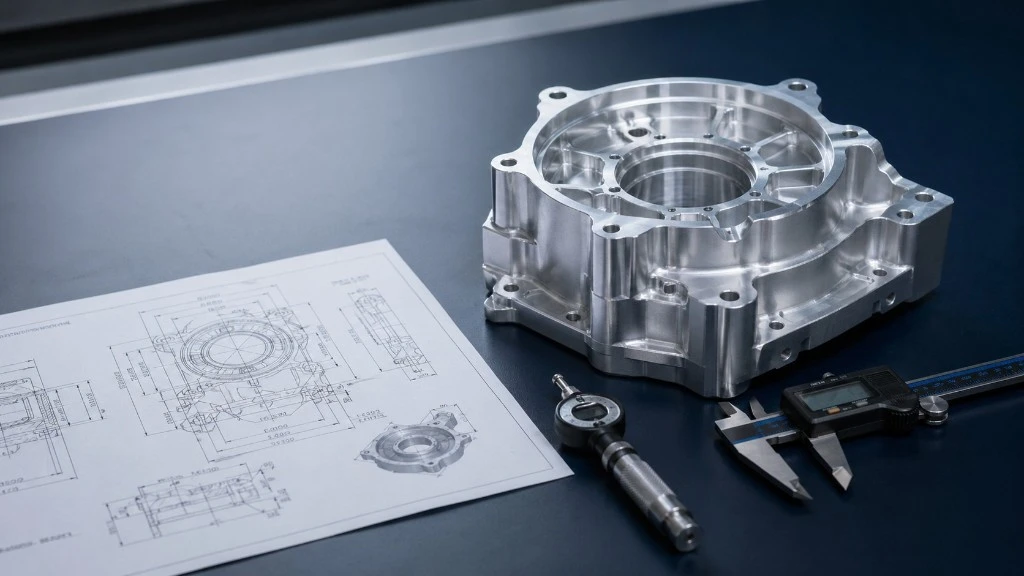
For example, a small Aluminum 6061-T6 housing may include one precision bore for a shaft fit, several clearance holes for assembly screws, one flat datum surface, one mating interface, and multiple outside faces that are mostly cosmetic.
If every surface, hole, and outside profile is assigned the same tight tolerance range, the quote may reflect a much higher level of setup and inspection effort than the function actually requires.
In this situation, the supplier may need to treat the entire housing as a high-control component, even though only the bore, the datum surface, and the mating interface truly drive performance.
That can increase:
- Setup time
- CMM inspection requirements
- In-process checks
- Scrap risk
- Lead time
- Overall part cost
A more practical approach is to separate the part into different levels of control:
- The precision bore receives tighter dimensional control.
- The datum surface is reviewed for flatness and alignment.
- Mating areas are checked based on actual assembly requirements.
- Clearance holes are toleranced based on their real fit function.
- Cosmetic outside faces follow a realistic general tolerance.
The goal is not to blanket the drawing in tight tolerances, but to apply strict control only where part function demands it. This does not compromise quality; it improves manufacturability, cost control, and inspection focus.
When Tight Tolerances Are Worth the Cost
Tight tolerances are justified when they protect the function of the part.
They often make sense for:
- Mating surfaces
- Bearing fits
- Press-fit or slip-fit features
- Sealing surfaces
- Alignment datums
- Precision bores
- Critical hole patterns
- Features that affect motion, assembly, or repeatability
In these areas, tighter tolerance is not simply a manufacturing preference. It protects the way the part fits, moves, seals, or repeats in use.
In some projects, looser tolerances may create more cost later through fit issues, assembly failures, functional instability, repeated inspection disputes, or batch inconsistency.
For low-volume CNC machining, tight tolerances must be reviewed not only for one successful part, but also for repeatability across the batch.
When the requirement is directly tied to part function, the added machining and inspection cost is easier to justify.
When Tight Tolerances Create Unnecessary Cost
Tight tolerances become a problem when they are applied to features that do not control function.
Common examples include:
- Non-critical outside profiles
- Cosmetic surfaces with no fit requirement
- Clearance features with enough functional margin
- Legacy drawing dimensions copied from old designs
- Over-constrained dimensions that do not affect assembly
- Tolerances applied uniformly across the whole part without feature priority
This is where cost rises without adding value.
A part can be expensive not because it is complex, but because too many features are controlled more tightly than necessary.
Tighter is not always better. Better control means knowing where tighter control actually matters.
How a Supplier Should Review Tight Tolerances
A serious machining supplier does not simply quote every tight number at face value. A responsible review process separates the drawing into three groups:
- Features that protect function
- Features that support inspection or assembly
- Features that may only add avoidable cost
Good machining review should help separate critical dimensions from inherited or unnecessary constraints before quoting begins.
What Buyers Should Check Before Sending an RFQ
Before sending a drawing for CNC machining, review the tolerance scheme with these questions:
- Which features directly affect fit, sealing, alignment, or function?
- Are tight tolerances applied only where they are necessary?
- Are any old or inherited tolerances tighter than the current design requires?
- Do the datums clearly show how the part should be inspected?
- Will the material or geometry make the tolerance difficult to hold?
- Does the project require FAI, CMM inspection, or documented reports?
- Could a slightly wider tolerance reduce cost without affecting performance?
These questions help reduce unnecessary cost before quoting begins.
They also help suppliers give a more accurate response.
If your drawing includes critical fits, tight bores, datum controls, or inspection-sensitive features, you can request a technical review before quoting or production planning.
How Langk Machining Reviews Tight Tolerance Requirements
At Langk Machining, tight tolerance review starts before production planning. We look at the drawing as a manufacturing and inspection system, not just as a list of dimensions.
First, we identify functional datums, critical features, fit and alignment zones, and tolerance stack-up risks. Then we review material behavior, geometry constraints, inspection requirements, and whether the machining process can remain stable under the required control level.
The purpose is not to challenge the drawing for the sake of changing it. The purpose is to identify where tighter control protects function and where it may only create avoidable cost, inspection burden, or lead-time risk.
Better tolerance decisions lead to clearer quoting, more stable machining, fewer inspection surprises, and a cleaner path from review to production.
Conclusion & Next Steps
Tight tolerances can be necessary, but they are never free.
They affect setup time, machining strategy, inspection effort, scrap risk, and communication before production begins. When applied to the right features, they protect function and reliability. When applied everywhere, they often increase cost without improving the part.
The best tolerance strategy is selective control: control the features that define function, keep non-critical features realistic, and review the drawing before machining begins.
If your drawing includes tight bores, functional datums, mating surfaces, or inspection-sensitive features, we can review which dimensions need tighter control before quoting or production planning.
Need a Tolerance Review Before Quoting?
If your drawing includes tight bores, functional datums, mating surfaces, or inspection-sensitive features, we can review which dimensions need tighter control before quoting or production planning.